
GuardAI
About GuardAI

25 years of risk management meets cutting-edge AI research

GuardAI was founded to solve a problem neither industry nor academia could crack alone: making production AI systems safe without making them useless. Our team combines decades of enterprise risk management with peer-reviewed security research.

GuardAI was built to give enterprises a dedicated policy layer for AI deployments — one that sits outside provider-default safety, applies organization-specific rules, and can be evaluated against public benchmarks and customer-specific traffic.

How GuardAI started.

Where cutting-edge technology meets pressing business needs.

2015

The first meeting

Jenny Yu and Professor Haohan Wang connected at Carnegie Mellon's Innovation Summit, laying the foundation for GuardAI.

CMU Innovation Summit 2015
June 2023

The catalyst

Following the EU AI Act adoption, Jenny penned “You Cannot Manage AI without an AI Tool,” recognizing LLMs challenged traditional risk frameworks.

August 2023

The breakthrough

Jenny discovered Professor Wang had authored a comprehensive survey on trustworthy and aligned ML, systematically analyzing robustness, adversarial defense, interpretability, and fairness. She reached out immediately — the right technology met the right business need.

2023 — Present

GuardAI today

Building scalable, trust-infused AI solutions that bridge academic research and enterprise needs for AI governance and compliance.

Meet the founders.

Combining decades of expertise in AI risk management and trustworthy ML research.

Jenny Yu

Jenny Yu

Founder

Himalaya Quantitative Solutions (HQS)

25 years of experience in AI/ML/model risk management at major global financial institutions including FHLBank Pittsburgh, BNY Mellon, and PNC Financial Services.

Specializes in designing holistic AI/ML/model risk management frameworks and building validation/benchmarking tools to mitigate risk in a systematic and automatic way.

2013 Global Innovation Winner at PNC — led development of validation models and automated benchmarking processes that increased coverage from 5% to 99%.

Leads HQS in creating a trustworthy AI tool for Generative AI risk management.

Recognized for empowering senior leadership by transforming complex data into actionable insights, bridging gaps between intricate data, algorithms, and business processes.

Offers strategic solutions that resonate with stakeholders' needs, pragmatically and effectively.

Asian American Executive Program, Stanford University Graduate School of Business (2022). Master of Science with double majors in Quantitative Finance and Real Estate from UW-Madison.
Haohan Wang

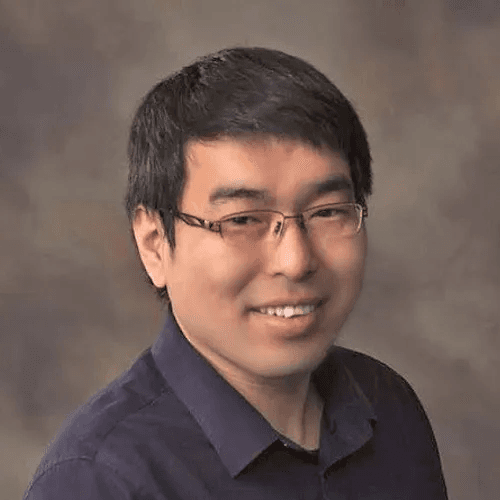
Haohan Wang

Technology Advisor

Assistant Professor, UIUC

Assistant Professor in the School of Information Sciences at the University of Illinois Urbana-Champaign (UIUC), with appointments across the Siebel School of Computing and Data Science, Carl R. Woese Institute for Genomic Biology, and National Center for Supercomputing Applications.

7,300+ citations on Google Scholar, with research featured at top-tier AI conferences including ICLR (Top 1% Oral) and CVPR (Top 2% Oral).

Research focuses on LLM security, adversarial robustness, and AI alignment with a decade of experience developing trustworthy machine-learning methods — from rigorous statistics to powerful deep learning and large language models.

His groundbreaking research on jailbreaking LLMs and defending against jailbreaking attacks, featured at NeurIPS 2024, directly advances the science behind AI guardrail technologies. Learn more about the research that forms the scientific backbone of GuardAI's protection mechanisms.

Authored comprehensive survey on trustworthy and aligned machine learning, systematically analyzing robustness, adversarial defense, interpretability, and fairness.

Recognized as Top 50 AI+X Rising Young Scholar by Baidu Inc. (2022).

Ph.D. in Computer Science from Carnegie Mellon University (Language Technologies Institute).

Research-driven technology.

GuardAI's protection mechanisms are grounded in peer-reviewed academic research from Professor Wang's extensive work on trustworthy machine learning. Our technology has been rigorously tested against state-of-the-art attack methodologies documented in top-tier conferences like NeurIPS 2024.

By combining Jenny's 25 years of enterprise risk management experience with Professor Wang's decade of research into AI trustworthiness, GuardAI delivers solutions that are both academically rigorous and practically deployable in production environments.

What drives the work.

Three principles that shape how we build, test, and deploy.

01

Trust through transparency

AI systems must be trustworthy, explainable, and aligned with human values. Our solutions are grounded in published research and rigorous testing — no black boxes.

02

Academic rigor meets practice

We bridge the gap between cutting-edge research and enterprise deployment, ensuring solutions are both theoretically sound and practically effective in production.

03

Customer-centric innovation

We listen to evolving needs and regulatory challenges, continuously adapting our technology to address emerging threats and compliance requirements.

Let's protect your AI deployment.

Whether you're evaluating safety options for a new product or hardening an existing system, we can show you exactly what GuardAI catches — and what your current setup misses.